Ryan Trevis, founder of Stradvert
I used to beatbox for a living. Now I run a street interview ad agency that has filmed for 200 plus brands across three continents. Here is how that actually happened, with no gaps filled in.
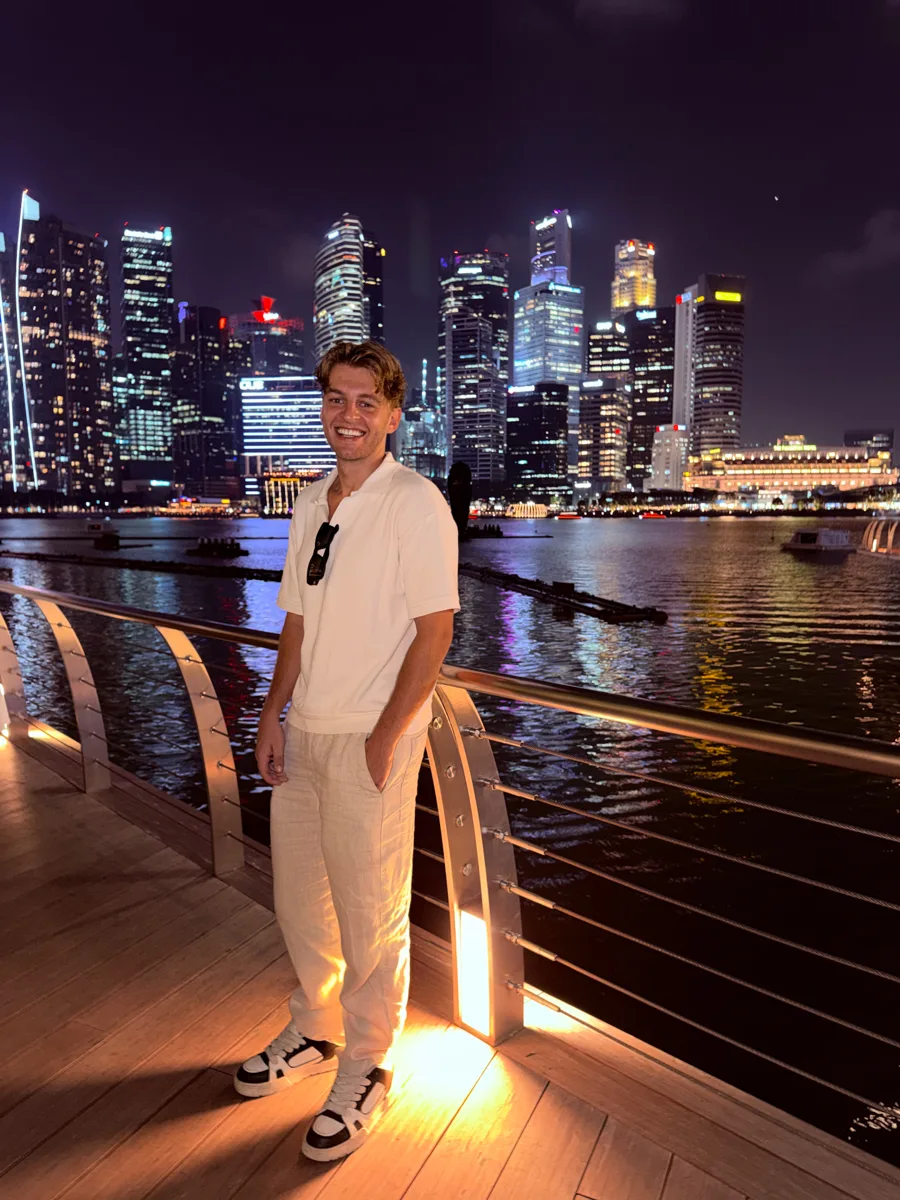
I beatboxed for a living. Busking on the street, holiday parks, schools, and when it was going well, cruise ships. It paid the bills and it was the only trade I knew. Then COVID hit and all of that work ended overnight. No stage, no income, no plan.
When gigs stopped, I still had the one skill that mattered most: stopping strangers and getting them to talk to me. Busking teaches you that in a way nothing else does. You have thirty seconds to get someone's attention on a street they didn't choose to stand on, or you get nothing. In 2022 I pointed that skill at a camera instead of a beat, and started stopping strangers on the street to film interviews.
At first it was just filming, no brand attached, learning what made a stranger stop, answer honestly, and give you something worth cutting into an ad. In 2023 I sold the first ads made this way to a brand. That invoice still exists. I'll show it to you on a call if you ask.
Stradvert Ltd was incorporated in 2024, once the model was proven and repeatable enough to build a company around. Since then we've filmed street interview ads for 200 plus brands, across three continents, always with real people, a real crew, and a signed release for every face on camera.
/ How it looks now
Three continents, one method.
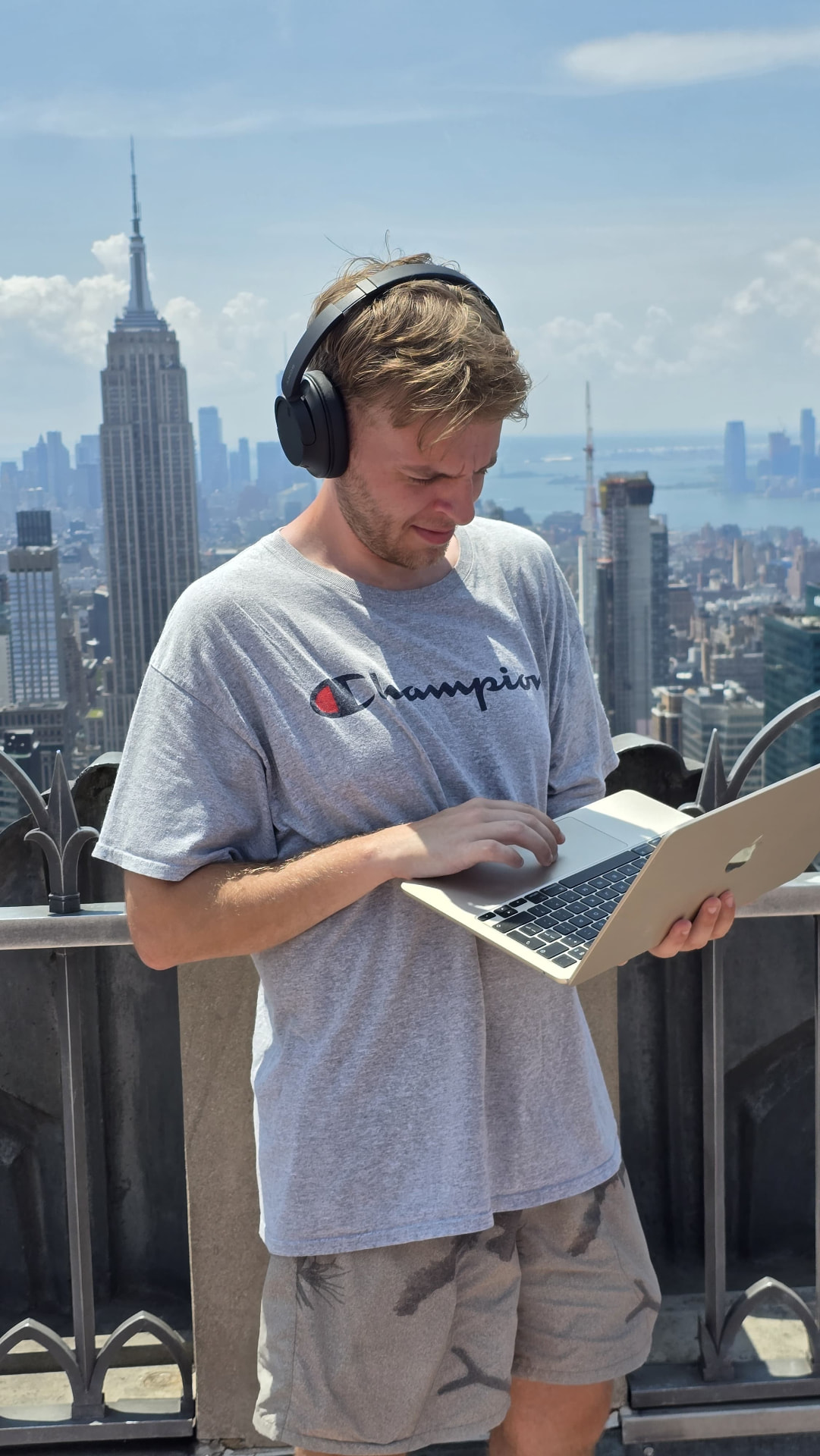
Concepts get written up wherever the next shoot is. Filming has taken us to London, Manchester, Birmingham, New York, Los Angeles, Miami, Las Vegas, Bangkok and Sydney, with London and Manchester as our default production locations.
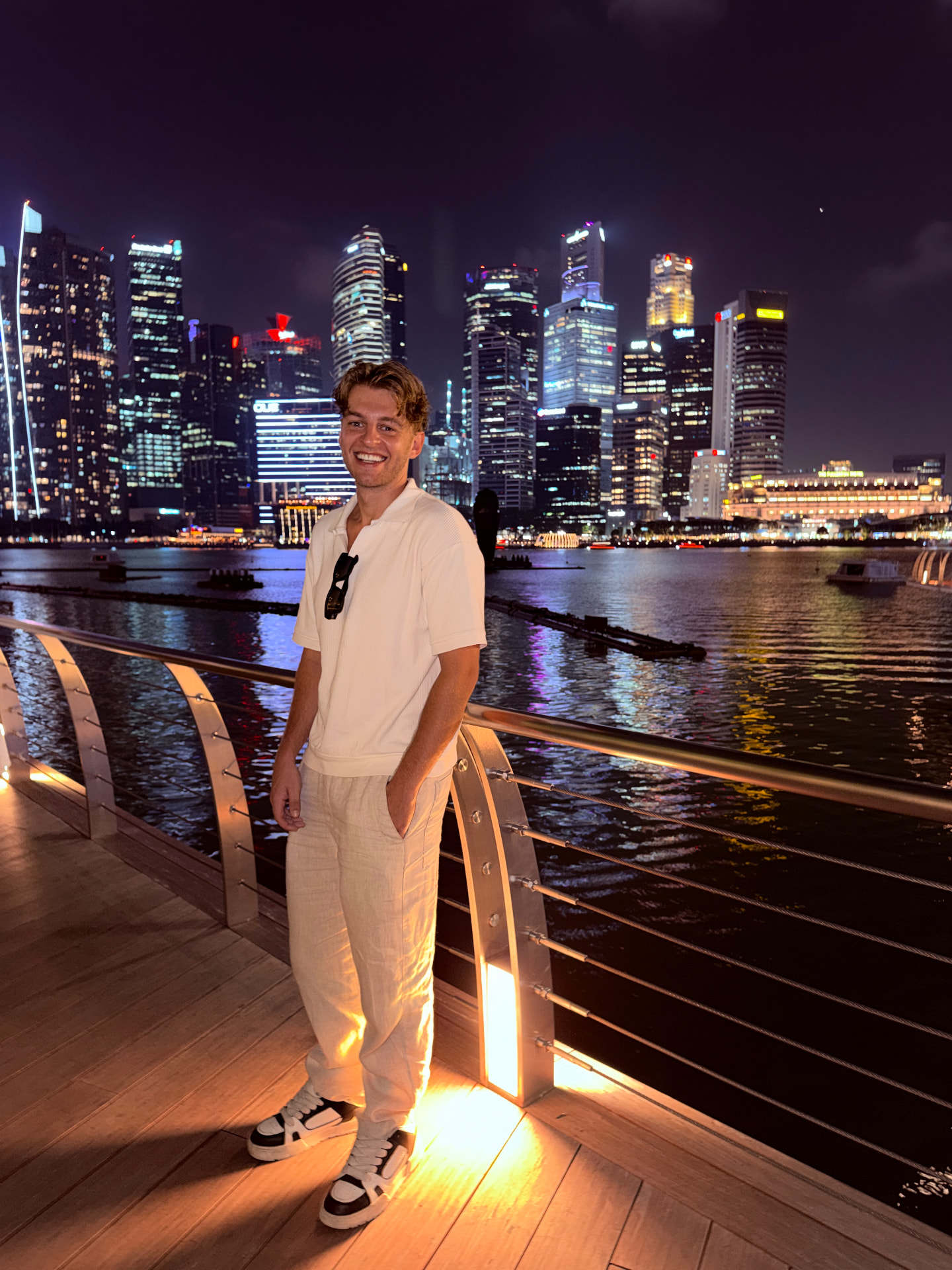
The company runs the same way wherever the crew lands: cast on the street, film the real reaction, cut it into ads, and deliver a library rather than one hero video.
/ What hasn't changed
Nothing on camera is generated.
Every ad Stradvert delivers starts with a real stranger on a real street, filmed by a human crew. Nothing is AI generated, nothing is synthetic. That's the same thing that made busking work: a real person reacting to you in real time, with nothing rehearsed about the answer.
The results of that approach are published, not just claimed. Real ad account data from Stradvert clients, including spend, return and cost per result, is on the proof page.
/ Why street interviews at all
A busker's trade, pointed at a camera.
Busking is a strange training ground for advertising, but it works. You learn to read a crowd instantly, to know which stranger is actually going to stop, and to get to the interesting part of a conversation before someone's attention drifts back to their phone. None of that is taught in a marketing course. It's taught by standing in the same spot every day and watching what makes people stop.
That's the whole skill behind Stradvert. A street interview ad only works if the person on camera is really reacting, in real time, to a real question. If they've been rehearsed, or if the whole thing is generated, the reaction reads as fake and cold traffic scrolls past it. The years spent stopping strangers for a living turned out to be the exact skill needed to make that work as an ad format.
When I started stopping strangers on the street with a camera in 2022, it wasn't a business plan. It was the only thing I knew how to do that still worked without a stage. The business came after, once brands started asking for more of it.
/ From one shoot to an agency
Why Stradvert exists as a company.
Selling the first ads in 2023 answered the question of whether brands would pay for this. Incorporating Stradvert Ltd in 2024 answered a different question: whether the same method could be repeated, at volume, for brands that had never met me and didn't care about the beatboxing story. It could. A crew, a set of concepts, a high footfall street and a camera is a process, not a one off trick.
Since then the work has scaled past one founder with a camera. We now run full shoot days across three continents for 200 plus brands, casting strangers, filming, editing and delivering ads cut into hook variations. London and Manchester are our default production locations. Bali and Barcelona are available with additional production arrangements, and we've filmed before in Birmingham, New York, Los Angeles, Miami, Las Vegas, Bangkok and Sydney.
What hasn't changed is who is on camera and how they got there. Every person in every ad is a real stranger, approached on a real street, on the day. Nobody is cast in advance and nobody is reading from a script we wrote for them.
/ Who this is for
Brands already spending on paid social.
Stradvert works with brands already spending seriously on paid social, who need more creative to test rather than another single ad to hope on. That's the same problem the format was built to solve: a busking pitch dies the moment it goes stale, and so does a paid ad. The fix in both cases is the same, more variations, tested against real reactions, so something keeps working while the last thing fatigues.
If that sounds like where your account is, the fastest way to see whether it fits is a call. I'll ask about your current creative, what a fair first test looks like for you, and recommend the right scope for that test.
Talk to Ryan about your next shoot.
A 30 minute call about your current creative, the first test and the right scope.
Book a call